
Avalanche danger scale definitions
Snowpack stability
Likelihood of triggering
Recommendations for mountain activity
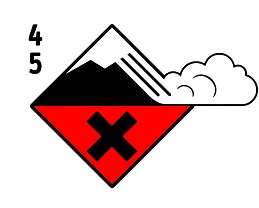
5 - Very high
Snowpack stability
The snowpack is poorly bonded and largely unstable in general.
Likelihood of triggering
Numerous very large*** and often extremely large*** natural avalanches can be expected, even in moderately steep terrain*.
Recommendations for mountain activity
Extremely unfavourable conditions.
All activity in the mountains is discouraged, remaining in areas with no avalanche danger is recommended.
4 - High
Snowpack stability
The snowpack is poorly bonded on most steep slopes*.
Likelihood of triggering
Triggering is likely, even from low additional loads**, on many steep slopes*. In some cases, numerous large*** and often very large*** natural avalanches can be expected.
Recommendations for mountain activity
Higly unfavourable conditions.
All activity in alpine terrain is discouraged. Remaining within moderately steep slopes* is advocated, danger of avalanches from slopes above the current position must be taken into consideration.
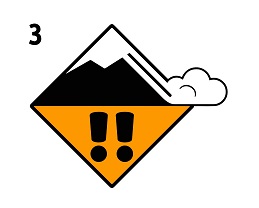
3 - Considerable
Snowpack stability
The snowpack is moderately to poorly bonded on many steep slopes*.
Likelihood of triggering
Triggering is possible, even from low additional loads**, particularly on the indicated steep slopes*. In certain situations some large***, and in isolated cases very large*** natural avalanches are possible.
Recommendations for mountain activity
Mostly unfavourable conditions.
Activity in the mountains requires extensive experience and skill, as well as significant ability to adequately assess avalanche danger locally. Steep slopes* should be avoided, particularly those indicated in avalanche bulletin as unfavourable in regard of aspect or altitude. Following the elementary principles of safety is indispensable.
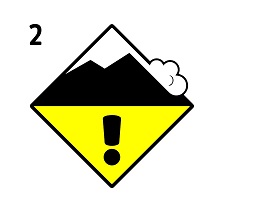
2 - Moderate
Snowpack stability
The snowpack is only moderately well bonded on some steep slopes*; otherwise well bonded in general.
Likelihood of triggering
Triggering is possible, primarily from high additional loads**, particularly on the indicated steep slopes*. Very large*** natural avalanches are unlikely.
Recommendations for mountain activity
Partially unfavourable conditions.
Acitvity in the mountains requires ability to adequately assess local avalanche danger, appropriate selection of itinerary, as well as following the elementary principles of avalanche safety on all steep slopes*, particularly those indicated in avalanche bulletin as unfavourable in regard of aspect or altitude.
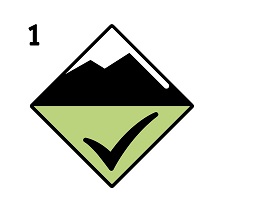
1 - Low
Snowpack stability
The snowpack is well bonded and stable in general.
Likelihood of triggering
Triggering is generally possible only from high additional loads** in isolated areas of very steep, extreme terrain*. Only small*** and medium*** natural avalanches are possible.
Recommendations for mountain activity
Mostly favourable conditions.
Particular caution must be maintained on very steep* and extremely steep slopes*.
* Steep terrain:
- moderately steep terrain: slopes shallower than about 30°
- steep slopes: slopes steeper than about 30°
- very steep, or extreme terrain: particularly adverse terrain related to slope angle (more than about 40°), or particularly adverse terrain related to terrain profile, proximity to ridge, smoothness of underlying ground surface
** Additional loads:
- low: individual skier / snowboarder, riding softly, not falling; snowshoer; group with good spacing (minimum 10m) keeping distances
- high: a single person on foot, two or more skiers / snowboarders etc. without good spacing (or without intervals); snowmachine; explosives
- natural: without human influence
Extensions to the avalanche bulettin:
The avalanche bulletin may include additional information such as altitude and aspect of unfavourable slope, terrain forms with increased avalanche danger, as well as information about typical avalanche problem.
*** Avalanche size classification
Size
Name
Runout length and dimension
Destructive power
1
Small avalanche (sluff)
Snow relocation typically stops before the end of a slope.
Minimal danger of burying (danger of falling).
2
Medium avalanche
Snow avalanche stops typically at the end of a slope.
Could bury, injure or kill a person.
3
Large avalanche
Snow avalanche could traverse flat terrain (considerably below 30°) over distances of less than 50 m.
Could bury and destroy a car, damage a truck; destroy a small building or break a few trees.
4
Very large avalanche
Snow avalanche traverses flat terrain (considerably below 30°) over distances more than 50 m and can reach valley ground.
Could bury and destroy a railway car, large truck, several buildings or a piece of forest.
5
Extremely large avalanche
Snow avalanche reaches valley ground; largest runout distance known.
Could gouge the landscape; disastrous damage potential.
Typical avalanche problems
The five types of avalanche problems as defined by the European Avalanche Warning Services EAWS aim to describe the typical situations of snow instability encountered in avalanche terrain. They support avalanche professionals and recreationists in their evaluation of the avalanche hazard by emphasizing the cause of instability. They complement the danger level and the danger locations (slope aspect and elevation) and represent the third highest level in the information pyramid.
The following definitions include a general characterization of the problem including:
- expected avalanche types
- a description of the typical spatial distribution and of the position of the weak layer in the snowpack
- a characterization of the release mechanism
- a description of typical durations and time periods of the problem
- and finally some travel advises for recreationists
The focus thereby is on providing information for recreationists traveling in avalanche terrain. However, the typical avalanche problems may also be useful for avalanche safety services.
Typical avalanche problem table
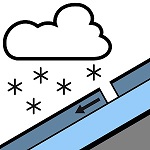
New snow
The avalanche problem is related to current or most recent snowfall. The amount of additional loading by new snow onto the existing snowpack is the crucial factor of the new snow problem. How critical the loading is, depends on various factors such as air temperature, wind or characteristics of the old snow surface.
New snow |
||
| What? | Characteristics: The avalanche problem is related to current or most recent snowfall. The amount of additional loading by new snow onto the existing snowpack is the crucial factor of the new snow problem. How critical the loading is, depends on various factors such as air temperature, wind or characteristics of the old snow surface. |
|
|
Avalanche type and trigger:
|
||
| Where? | Spatial distribution: In general, a widespread presence and often on all aspects. |
|
Position of weak layers in the snowpack
Dry-snow slab avalanches:
Dry loose snow avalanches:
|
||
| Why? |
Release characteristics
Dry-snow slab avalanches:
Dry loose snow avalanches:
|
|
| When? | Duration: Typically during snowfall and up to a few days after. |
|
| How to manage? | Identification of the problem in the field: The new snow problem is fairly easy to recognize since it affects most of the terrain but the characterization of the associated danger can be very tricky. Consider critical amounts of new snow and recent avalanche activity. |
|
|
Travel advice:
Dry-snow slab avalanches:
Dry loose snow avalanches:
|
||
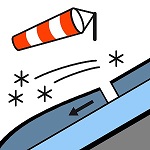
Wind slab
Wind slabs are formed when loose snow in near‐surface layers (new snow or old snow) is transported and deposited by wind.
Wind slab |
||
| What? | Characteristics: Wind slabs are formed when loose snow in near‐surface layers (new snow or old snow) is transported and deposited by wind. |
|
|
Avalanche type and trigger:
|
||
| Where? | Spatial distribution
Highly variable but typically on leeward slopes, gullies and bowls, near distinct changes in slope angle, behind ridgelines or other wind‐sheltered locations. More common above treeline. |
|
Position of weak layers in the snowpack
Typically between wind slab and old snow or within the wind slab layers due to variations in wind speed. Occasionally slightly lower in the old snowpack. In that case, the problem “persistent weak layers” additionally prevails.
| ||
| Why? |
Release characteristics
The wind slab is an additional load on a weak layer and builds a slab structure that is particularly prone to being triggered.
|
|
| When? | Duration:
The wind slab problem can evolve very quickly. The problem lasts typically during the snowdrift event and tends to stabilize within a few days following the storm cycle.
|
|
| How to manage? |
Identification of the problem in the field:
If not buried by new snow, the wind slab problem can be recognized with training and good visibility. Consider wind signs and locate snow drifted deposits.
Typical clues: snow drifted deposits, recent avalanche activity and sometimes shooting cracks or whumpfs.
However, it is often hard to determine the age of snow drifted deposits and wind signs do not necessarily imply an avalanche problem (e.g. in absence of a weak layer).
|
|
|
Travel advice:
Avoid snow drifted deposits in steep terrain.
|
||
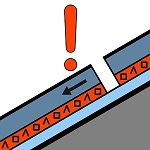
Persistent weak layers
The avalanche problem is related to the presence of one or more persistent weak layers in the old snowpack. These weak layers typically include faceted crystals, depth hoar or surface hoar crystals.
Persistent weak layers |
||
| What? | Characteristics: The avalanche problem is related to the presence of one or more persistent weak layers in the old snowpack. These weak layers typically include faceted crystals, depth hoar or surface hoar crystals. |
|
|
Avalanche type and trigger:
|
||
| Where? | Spatial distribution:
The avalanche problem can be widespread or quite isolated. It can exist in all aspects, but is more frequently found on shady, wind sheltered slopes.
|
|
Position of weak layers in the snowpack:
In the old snowpack, often deeply buried. However, when deeply buried triggering is less likely, but avalanches may become large.
| ||
| Why? |
Release characteristics:
Avalanche release occurs when loading exceeds the strength of the weak layer.
|
|
| When? | Duration:
Weak layers can persist for weeks to months; possibly even during most of the winter season.
|
|
| How to manage? |
Identification of the problem in the field:
Persistent weak layers are very challenging to recognize. Signs of instability such as whumpfs are typical, but not necessarily present. Stability tests can be helpful to detect persistent weak layers.
Knowledge of snowpack evolution is required and reference to the avalanche report is important.
|
|
|
Travel advice:
Travel conservatively and avoid terrain features (e.g. large steep slopes) where consequences of being caught are large (e.g. deep burial). Consider the history of weather and snow cover processes in the area. Be extra cautious in areas with a thin snowpack and at the transition from thin to deep snowpack.
Attention: The release of avalanches in persistent weak layers are a significant cause of recreational avalanche fatalities.
|
||
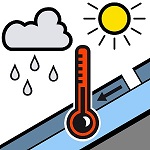
Wet snow
The avalanche problem is related to a weakening of the snowpack due to the presence of liquid water. Water infiltrates the snowpack due to melt or rain.
Wet snow |
||
| What? | Characteristics: The avalanche problem is related to a weakening of the snowpack due to the presence of liquid water. Water infiltrates the snowpack due to melt or rain. |
|
|
Avalanche type and trigger:
|
||
| Where? | Spatial distribution:
When water infiltration is due to melting, the problem is often specific to certain slope aspects (solar radiation) and elevations (air temperature).
In case of rain on snow, all slope aspects are affected (below the elevation, where snow turns to rain).
|
|
Position of weak layers in the snowpack:
Anywhere in the snowpack, in case of slab avalanches often at pre‐existing weak layers.
|
||
| Why? |
Release characteristics
Wet-snow slab avalanches:
Wet loose snow avalanches:
|
|
| When? | Duration:
|
|
| How to manage? |
Identification of the problem in the field:
The wet snow problem is usually easy to recognize. Onset of rain, snowballing, pin wheeling and small wet slab or loose snow avalanches are often precursors of natural wet‐snow avalanche activity. Deep foot‐ or ski‐penetration is another sign of increased wetting.
|
|
|
Travel advice:
If the wet snow surface freezes overnight due to clear skies and cold temperatures then develops a strong supporting crust, favourable conditions will usually be present in the morning. After warm, overcast nights, the problem will often be in existence in the morning. Normally rain on new snow creates this problem almost immediately.
Good timing and trip planning are important. Consider avalanche runout zones.
|
||
Gliding snow
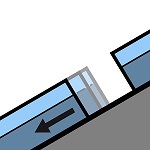
The entire snowpack is gliding on the ground, typically on smooth ground such as grassy slopes or smooth rock zones. High activity of glide‐snow avalanches is typically related to a thick snowpack with no or only few weak layers. Glide‐snow avalanches can occur both with a cold dry snowpack and with a warm moist or wet snowpack. The release of a glide‐snow avalanche is difficult to predict, although in many cases glide cracks open prior to release.
Gliding snow |
||
| What? |
Characteristics:
The entire snowpack is gliding on the ground, typically on smooth ground such as grassy slopes or smooth rock zones. High activity of glide‐snow avalanches is typically related to a thick snowpack with no or only few weak layers. Glide‐snow avalanches can occur both with a cold dry snowpack and with a warm moist or wet snowpack.
The release of a glide‐snow avalanche is difficult to predict, although in many cases glide cracks open prior to release.
|
|
|
Avalanche types and trigger:
|
||
| Where |
Spatial distribution:
Primarily on smooth ground and on slopes of any aspect, but more often on sun‐exposed slopes.
|
|
|
Position of weak layers in the snowpack:
Interface between the ground and overlaying snowpack.
|
||
| Why? |
Release characteristics
Glide‐snow avalanches are caused by a loss of friction at the snow‐ground interface due to the presence of liquid water.
|
|
| When? |
Duration:
Days to months; occasionally during entire winter‐season. The release can occur at any time during the day. In spring, glide‐snow avalanches occur often during the second part of the day.
|
|
| How to manage? |
Identification of the problem in the field:
The glide snow problem can often be recognized by the presence of glide cracks, which are often pre‐cursors of glide snow avalanche release. However, the presence of glide cracks does not indicate imminent avalanche release, which is nearly impossible to predict. Avalanche release without pre‐existing glide cracks is also common.
|
|
|
Travel advice:
Avoid areas close to glide cracks.
|
||
The two optional avalanche problems as defined by the European Avalanche Warning Services EAWS also aim to support avalanche professionals and recreationists in their evaluation of the avalanche hazard. However, they are created for unique situations that are distinctly different from the five core avalanche problems. The two optional avalanche problems may be used to illustrate more clearly the hazard situation in a particular geographical area and/or in areas that are influenced by unique topographic and climatic factors.
Optional avalanche problems
Comices
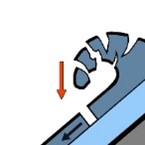
A wave‐like formation of soft or hard wind drifted snow, often overhanging.
Gliding snow |
||
| What? |
Characteristics:
A wave‐like formation of soft or hard wind drifted snow, often overhanging.
|
|
|
Avalanche types and trigger:
Cornice collapse can trigger new snow avalanches, wind slabs, persistent slabs, or wet avalanches on steep slopes below.
|
||
| Where |
Spatial distribution:
Cornices occur on the leeward sides of wind‐exposed ridgelines or sharp terrain breaks.
|
|
|
Position of weak layers in the snowpack:
Snow drift extends the cornice outward, so the fresher, sensitive, and more easily triggered part of the cornice is generally near its outer edge.
|
||
| Why? |
Release characteristics
Natural cornice collapses are common during windy midwinter storms, as cornices rapidly build outward and become unstable with drifting storm snow.
|
|
| When? |
Duration:
|
|
| How to manage? |
Identification of the problem in the field:
Cornices occur on ridgelines or sharp terrain breaks and are usually easy to recognize. However, while standing on the top of cornices it is sometimes difficult to estimate their size.
Cornices often break further back than expected, even onto flat terrain, and are the cause of many unexpected falls in the mountains.
|
|
|
Travel advice:
Avoid travel on and below large ridge top cornices, especially during periods with drifting snow or the onset warm temperatures.
|
||
No distinct avalanche problem
When none of the avalanche problems is distinct, the term “no distinct avalanche problem” can be used to describe the situation. This is not a specific avalanche problem. It is a very inconclusive scenario, without a clear pattern that a user could follow to lower consequences. Any avalanche type is possible.
ATTENTION: Do not consider the absence of a typical avalanche problem as safe conditions. Normal caution is still advised.